Medicine, Health, and History
A Blog by Paul E. Stepansky, Ph.D.
Skip to content
  • Home
  • About Paul Stepansky
  • PES Presentations
  • PES Publications
← Leeches, Maggots, and MAGAs
Corporate Healthcare is not Medicine: I. When does the caring begin? →

Out with the Trash

Posted on November 9, 2024 | Leave a comment


DEMOCRACY

Out with the Trash



Share this post:

  • Click to share on X (Opens in new window) X
  • Click to share on Facebook (Opens in new window) Facebook
  • Click to share on LinkedIn (Opens in new window) LinkedIn
  • Click to print (Opens in new window) Print
Like Loading...

Related

This entry was posted in General. Bookmark the permalink.
← Leeches, Maggots, and MAGAs
Corporate Healthcare is not Medicine: I. When does the caring begin? →

Leave a comment Cancel reply

  • Recent Posts

    • Choose Science
    • Corporate Healthcare is Not Medicine: III. The Myth of “Patient Relations”
    • Corporate Healthcare is not Medicine: II. Who Cares?
    • Corporate Healthcare is not Medicine: I. When does the caring begin?
    • Out with the Trash
  • Archives

  • Categories

    • AIDS/HIV
    • and Covid-19
    • Antebellum Medicine
    • Anti-democracy of
    • Antivaccinationism
    • Attachment Theory
    • Bioethics
    • Black Death
    • Blood transfusions
    • Buck v. Bell
    • Cholera
    • Christian Nationalism and Healthcare
    • Civil War Medicine
    • Classics and Medicine
    • Cold War medicine
    • Corona Virus
    • Corporate healthcare
    • Covid-19
    • Deficiency disease
    • Diabetes
    • Diphtheria
    • Doctor-Patient Communication
    • Empathy
    • ER Medicine
    • Family Doctors
    • Family Doctors, Then & Now
    • for the feebleminded
    • Franco as
    • General
    • General Practice
    • Genetic medicine
    • Health Care Reform
    • Healthcare Delivery Systems
    • Hitler as
    • horse antitoxin
    • Humoral medicine
    • Hypodermic Injection
    • Indian private boarding
    • Influenza Pandemic
    • Insect therapy
    • Leeching
    • Maggot therapy
    • Malaria
    • Mask-wearing during
    • Mask-wearing during
    • Medical Education
    • Medical Humanities
    • Medical Instruments
    • Medical Office Management
    • Medical Politics
    • Medical Technology, Old & New
    • Medicalization
    • Medicine and Music
    • Medicine in Vietnam
    • Medicine in WWI
    • Medicine in WWII
    • Medicine, Gender, Race
    • Medieval Medicine
    • Medieval medicine of
    • Military Psychiatry
    • Mussolini as
    • Narrative Medicine
    • Needle Phobia
    • Nineteenth-Century Medicine
    • Nurse practitioners
    • Nurses in Civil War
    • Nurses in WWI
    • Nursing
    • Nursing and Gender
    • Nursing Care
    • Nursing education
    • Patient Rating Services
    • patient rights
    • Pellagra
    • physician burnout
    • Polio
    • Political Messiahs
    • Premed Education
    • Preventive medicine
    • Primary Care
    • Procedural Rural Medicine
    • Psychiatry in Medicine
    • Psychoanalysis
    • Psychopharmacology
    • Psychotherapy
    • Public health
    • race and; religions and
    • Rural Medicine
    • School vaccination
    • Schools
    • Smallpox
    • Summit Health
    • Surgical History
    • TB
    • Telemedicine
    • Then & Now
    • Trump
    • Trump as
    • Typhoid fever
    • USPHS
    • Vitamins
    • War & Medicine
    • William Baer
  • Subscribe via RSS

    • RSS - Posts
    • RSS - Comments
  • Enter your email address to follow "Medicine, Health, and History" and receive new posts by email.

  • A Gift to Children During the Pandemic

    • A Captivating Storyteller for Young Children During the Pandemic Let this wonderfully gifted librarian/educator lift the spirits of at-home children during the pandemic.
  • Blogs for Thinkers

    • The Neuro Times ~ A treasure trove of information, engagingly presented, about history of neurology and the neurosciences.
  • Keynote Books

    • The Last Family Doctor: Remembering My Father's Medicine ~ A memoir about a remarkable family physician and an earlier era of medicine.
  • Recommended

    • Centre for Medical Humanities Blog
    • Digital Clendening
    • Literature, Arts and Medicine Blog
    • Museum Boerhaave
    • Mutter Museum of the College of Physicians of Philadelphia
    • Wellcome Library
  • Websites Extraordinaire

    • Antique Medical, Surgical, and Dental Instruments ~ Superb collection of old and strange medical devices, beautifully photographed.
    • Digital Public Library of America ~ Knits together the holdings of major American libraries and archives into a single searchable collection. A scholarly feast.
    • Medical Museion (University of Copenhagen) ~ Wonderful images, exhibition notes, and commentaries from this marvelous place.
    • The Artwork of David Newman ~ The powerful and provocative paintings of the author of “Talking with Doctors” (Keynote Books, 2011).
    • The Illustrations of Yuko Okabe ~ A generous sampling of the sparkling work of this remarkably gifted young illustrator.
    • The Jewelry of Andrea Schettino ~ The online presentation is as exquisite as the handcrafted jewelry itself.
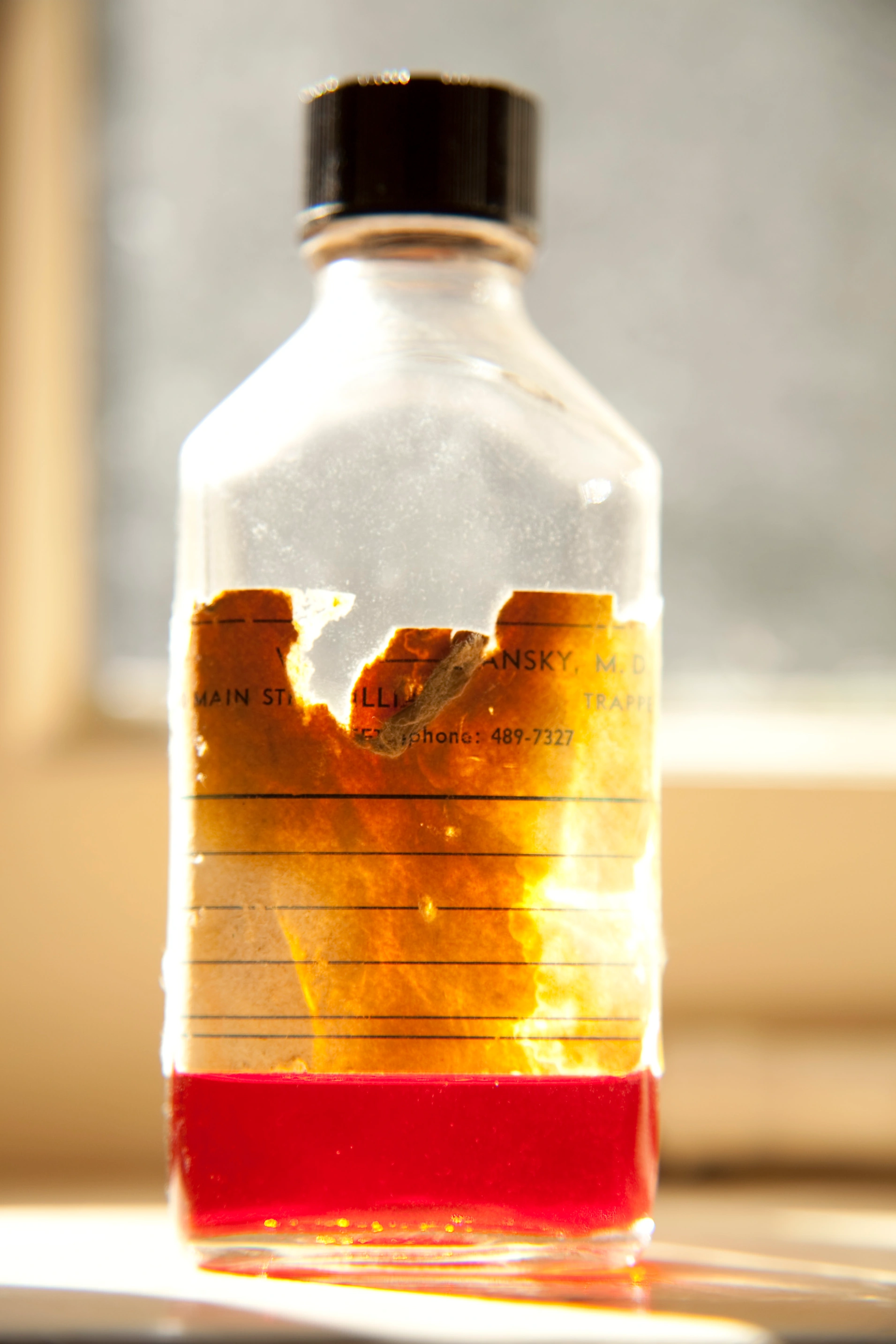
  • The Legendary Red Medicine

    The Red Medicine

    Read all about it in "The Last Family Doctor" (Keynote Books, 2011)
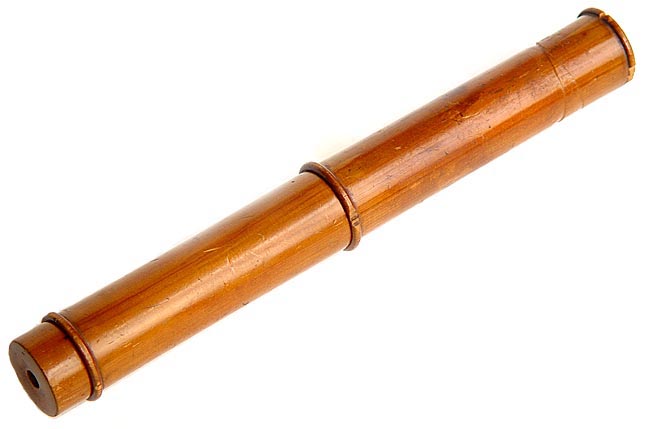
  • A Revolution In A Tube

    Laennec's wooden-tube stethoscope

    Rene Laennec's wooden-tube, monaural stethoscope of 1816
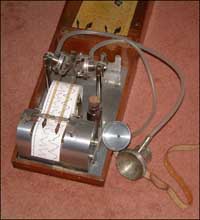
  • A Low-Tech Wonder

    James Mackenzie’s clinical polygraph of 1892 (show here in a refined version of 1914) permitted simultaneous tracings, via separate receivers, of the radial, venous, and arterial pulses. Used in conjunction with an even lower-tech instrument, the stethoscope, it allowed Mackenzie to make the first diagnosis of “auricular paralysis,” i.e., atrial fibrillation, in 1898.
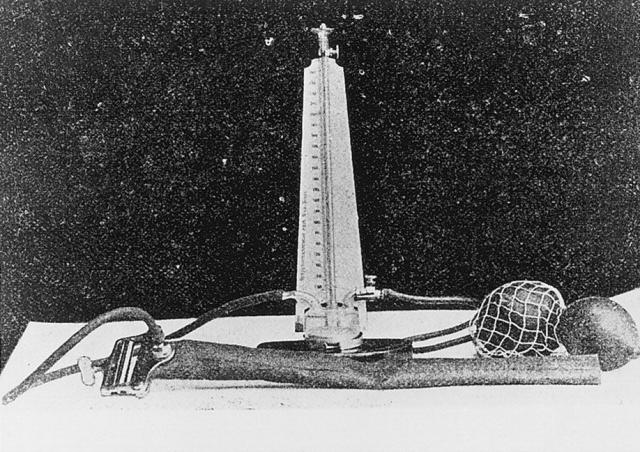
  • How’s Your Blood Pressure?

    Scipione Riva-Rocci's mercury sphygmomanometer of 1896, little different from mercury-column blood pressure meters of today
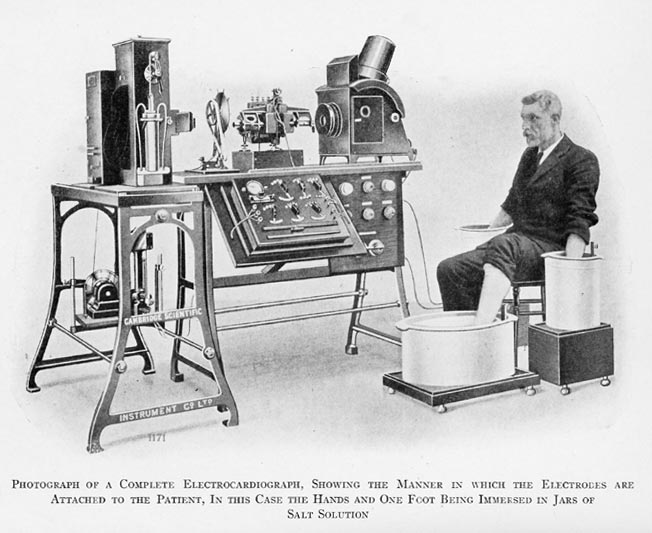
  • It Wasn’t Pretty But It Got The Job Done

    The string-galvanometer EKG machine developed by Willem Einthoven between 1900 and 1903. All its key components relied on technologies that only became available in the 1880s. The machine initially confirmed clinical diagnoses of atrial fibrillation and heart block, but came into its own after James Herrick described EKG changes in myocardial infarction in 1918.

  • The Mighty B-D “Empire”

    The Becton-Dickinson all-metal "Empire," a general utility syringe, was available in sizes from .25 to 8 ounces. It first appeared in the B-D catalog of 1911, where it was offered with a variety of tips for all manner of irrigation (nasal, ear, intra-trachael, intra-venous, urethral, and rectal).
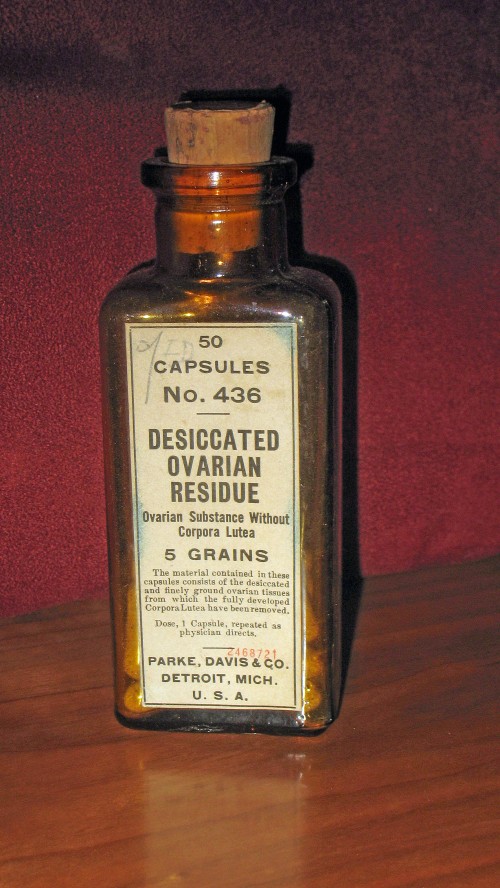
  • Organotherapy, anyone?

    Following the Mauritian physiologist Brown-Séquard’s report on the rejuvenating effects of testicular extract of 1889, physicians began prescribing extracts of the glandular organs of animals to remedy problems associated with the corresponding organ in the human body. Parke, Davis’s “desiccated ovarian residue,” in capsule form, was prescribed in the early twentieth century for conditions associated with ovarian dysfunction, especially menstrual disorders.

Blog at WordPress.com.
  • Comment
  • Reblog
  • Subscribe Subscribed
    • Medicine, Health, and History
    • Join 149 other subscribers
    • Already have a WordPress.com account? Log in now.
    • Medicine, Health, and History
    • Subscribe Subscribed
    • Sign up
    • Log in
    • Copy shortlink
    • Report this content
    • View post in Reader
    • Manage subscriptions
    • Collapse this bar
 

Loading Comments...
 

    %d