Tag Archives: smallpox vaccine

Choose Science

 “If you want to save your child from polio, you can pray or you can inoculate.  Choose science.”  — Carl Sagan, The Demon-Haunted World

Far be it for me to provide scientific illiterates like Donald Trump and Robert F. Kennedy, Jr. with an appreciation of vaccine science.  For them and their admirers, political commitments preclude an understanding of the human immune system, how vaccines work, and how scientists go about creating them and demonstrating their safety and efficacy.  So let’s take a different approach.  Let’s try to cultivate an appreciation of vaccine science that is strictly historical and begins with the Revolutionary War.  In this way, perhaps, vaccine skeptics can edge toward an appreciation of the foundational role of vaccination and its precursor, inoculation, to American greatness in the pre-Trump era.

_____________________

Dear Anti-Vaxxers:

Did you know that at the outset of the Revolutionary War,  inoculation against smallpox – the insertion of  pus from the scabs and pustules of smallpox sufferers into arms of healthy soldiers to induce typically mild attacks of smallpox – was a crucial instrument of strategic advantage for British and Continental forces alike?  When inoculated British troops came into contact with healthy Continental soldiers and noncombatants, that is, the latter frequently contracted smallpox in its unattenuated, occasionally lethal form.  The only defense against disablement-by-smallpox, it turned out, was inoculation, since inoculated soldiers and civilians, after recovery, were immunized against smallpox in both its deadly and attenuated forms.

Did you know that when George Washington realized that overcoming smallpox was crucial to winning the War of  Independence, he indeed mandated the inoculation of the entire Continental Army?   His order of 5 February 1777 also sent a clear message to all 13 colonies:  American governments – local, state, and national – were obligated to “protect public health by providing broad access to inoculation.”[1]

Did you know that when Benjamin Waterhouse began shipping  Edward Jenner’s smallpox vaccine to America in 1800, George Washington, John Adams, and Thomas Jefferson hailed it as the greatest discovery of modern medicine?  When Jefferson became president in 1801, he pledged to introduce the vaccine to the American public because “it will be a great service indeed rendered to human nature to strike off the catalogue of its evils so great a one as the smallpox.”

Did you know that Jefferson’s successor, James Madison, signed into law in 1813 “An Act to Encourage Vaccination”?  And did you know that among its provisions was the requirement that the U.S. postal service “carry mail containing vaccine materials free of charge.[2]

Did you know that during the Civil War, Union and Confederate Armies were so desperate to vaccinate their troops against smallpox that they had their doctors cooperate in harvesting “vaccine matter” from the lymph of heathy children and infants, especially the offspring of the formerly enslaved?[3]

Did you know that when the Civil War ended, doctors from North and South joined forces to achieve a better understanding of smallpox vaccination methods?[4]  They believed an epidemiological understanding of effective vaccination was a shared mission in the service of the re-united nation.

Did you know that in 1893 New York State legislators passed a law requiring public schools to deny enrollment to any child who could not present proof of vaccination, and that the law was extended to private and parochial schools via the Jones-Tallett amendment of 1915?[5]  And did you know that the legislators’ commitment to vaccination for all children was reaffirmed a half century later, when Title XIX of the Social Security Act of 1965 mandated “the right of every American child to receive comprehensive pediatric care, including vaccinations.”[6]
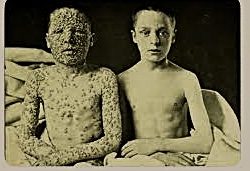
Two 13-year-old classmates exposed to the same strain of smallpox at the same time in their classroom in Leicester, England in 1901. One was vaccinated against smallpox in infancy. The other was not.

Did you know that throughout the 19th century, diphtheria was “the dreaded killer that stalked young children”?[7]   It was an  upper-respiratory inflammation of such severity that it gave rise to a  “pseudomembrane” that covered the pharynx and larynx and led to death by  asphyxiation.    Then, in the early 1890s, Emile Roux and his team at the Pasteur Institute discovered that horses not only withstood repeated inoculation with live diphtheria bacteria, but their blood, purified into an injectable serum, both restored infected children (and adults) to health and provided healthy kids with short-term immunity.  No sooner did the serum become commercially available in 1895 than the U.S. death rate among hospitalized diphtheria patients was cut in half  – an astonishing fact for the time.  By 1913, when the “Shick test” permitted on-the-spot testing for diphtheria, public health nurses and doctors discovered that 30% of NYC school children tested positive for the disease.  Injections of serum saved the vast majority and immunized their healthy classmates.  New York’s program of diphtheria immunization was copied by municipalities throughout the country. In the early 1930s, diphtheria serum gave way to a long-lasting toxoid vaccine, and in the 1940s, given in combination with pertussis and tetanus vaccines (DBT), diphtheria, “the plague among children” (Noah Webster), became a horror of the past.

A ghostly Skeleton, representing diphtheria, reaches out to strangle a sick child. Watercolor by Richard Tennant Cooper (1885–1957), commissioned by Henry S. Wellcome c. 1912 and now in the Wellcome Collection

Did you know that in Jacobson v. Massachusetts, a landmark decision of 1905, the U.S. Supreme Court affirmed the constitutionality of compulsory vaccination laws? And then, in 1922, in Zucht v. King, the Court stated that “no constitutional right was infringed by excluding unvaccinated children from school.”  The decision was written by Louis Brandeis.[8]

Did you know that in 1909 the U.S. Army made typhoid vaccination compulsory for all soldiers, and the requirement reduced the typhoid rate among troops from 243 per 100,000 in 1909 to 4.4 per 100,000 in three years?[9]  When America entered WWI in 1917, troops sailing to France had to be vaccinated.  Those who had not received their shots stateside received them on arriving at their camps.  Vaccination was not negotiable.  The obligation to live and fight for the nation trumped the freedom to contract typhoid, suffer, and possibly die.

Did you know that in the mid-1950s, when Cold War tensions peaked, mass polio vaccination was such a global imperative that it brought together the United States and Soviet Union?   In 1956, with the KGB in tow, two leading Russian virologists journeyed to Albert Sabin’s laboratory in Cincinnati Children’s Hospital, while Sabin in turn flew to Moscow to continue the brainstorming.  The short-term result was mass trials that confirmed with finality the safety and efficacy of the Sabin vaccine, while bringing its benefits to 10 million Russian school children and several million young Russian adults.[10]  The long-term result was the Global Polio Eradication Initiative that began in 1988 and eradicated polio transmission everywhere in the world except Afghanistan and Pakistan.

Did you know that following the development of a freeze-dried smallpox vaccine by Soviet scientists in 1958, Soviet Deputy Health Minister Viktor  Zhdanov and American public health epidemiologist Donald Henderson jointly waged a 10-year international campaign to raise enough money to make the vaccine available world-wide?[11]  The result of their campaign, in partnership with WHO, was the elimination of smallpox by 1977.[12]

Did you know that in 1963 a severe outbreak of rubella (German measles) led the U.S. Congress to approve the “Early and Periodic Screening, Diagnosis, and Treatment” amendments to Title XIX of the Social Security Act of 1965?  The amendments mandated the right of every American child to comprehensive pediatric care, including vaccinations.[13]

___________________

Now, in 2025, a segment of the population has reclaimed the mindset of antebellum America, when the Founding Fathers’ belief that medical progress safeguarded democracy gave way to something far less enlightened: the belief that everyone can be his or her own doctor.  Sadly, what the historian Joseph Kett termed the Dark Age of American medicine[14] has been revived among those newly skeptical of vaccination, and especially resistant to compulsory vaccination of children.  In its place, they proffer a contemporary variant of the anti-elitist cry of the Jacksonian era:  Every man his own doctor; every man his own remedies.  Transposed to the early 20th century, the Jacksonian cry resurfaced as resistance to smallpox vaccination.  To the anti-vaxxers of the time, the vaccine that, in its inoculatory form, helped win the Revolutionary War, was state-sanctioned trespassing on a person’s body.[15]  Now, in the wake of the coronavirus pandemic of 2020, the body has been politicized yet again.

In the case of President Donald Trump and Secretary of Health and Human Services Robert Kennedy, Jr., scientific ignorance of breathtaking proportions carries the prescientific regression back to ancient times.  When Plague, in the form of coronavirus, returned to America in 2020, legions of Trump followers followed the lead of a president whose understanding of viral infection followed the Galenic belief that whole-body states require whole-body remedies.  Disinfectants like Chlorox, he announced to the nation, kill microbes when we wipe our countertops with it.  Why then, he mused, can’t we destroy the coronavirus by injecting bleach into our veins?  What bleach does to healthy tissue, blood chemistry, and internal organs – these are questions an inquiring 8th grader might ask her teacher.  But they could not occur to a medieval physician or a boastfully ignorant President.  In Trump-world, as I observed elsewhere,[16] “there is no possibility of weighing the pros and cons of specific treatments for specific ailments (read: different types of infection, local and systemic).  The concept of immunological specificity is literally unthinkable.”  As to ingestion of hydroxychloroquine tablets, another touted Trump remedy for coronavirus, “More Deaths, No Benefit” begins the VA Virus Study reporting on Trump’s preferred Covid-19 treatment put forth by Trump.[17]

Trump’s HSS Secretary, Robert Kennedy, Jr. would not be among the inquiring 8th graders.  When coronavirus reached America, Trump at least followed a medieval script.  Kennedy Jr., encased in two decades of anti-vaccine claptrap, did not need a script. He simply absorbed coronavirus into an ongoing narrative of fabrication, misinformation, and bizarre conspiracy theories calculated to scare people away from vaccination.

As HHS Secretary, Kennedy Jr.’s mission has been to complexify access to coronavirus vaccines.  Most recently, he directed the CDC to rescind its recommendation of Covid-19 vaccination for pregnant women and healthy young children.  The triumph of scientists in creating safe genetic RNA vaccines could not dislodge the medieval mindset and paranoid delusions that have long been his stock in trade.  No, Mr. Secretary, Covid-19 was not engineered to attack Caucasians and African Americans while sparing Ashkenazi Jews and the Chinese.  No, Covid-19 vaccines were not created to effect governmental control via implanted microchips.  No, vaccines do not cause autism.  No, Wi-Fi is not linked to cancer.  No, anti-depressants do not lead to school shootings.  No, pharmaceutical firms are not conspiring to poison children to make money.

During the Black Death, 14th-century Flagellants roamed the streets of continental Europe, whipping themselves in a frenzy of self-mutilation that left them lacerated if not dead.  Their goal was to placate a wrathful God who had breathed down, literally, the poisonous vapors of Plague.  What they did, in fact, was leave behind an infectious stew of blood, tissue, and entrails that brought Plague to local villagers.   Kennedy, Jr. speaks out and showers listeners with verbal effluvia that induces them to forego vaccination and other scientifically grounded safeguards against disease.   Health-wise, he is a Flagellant,  spewing forth misinformation that puts listeners and their children at heightened risk for Covid-19 and  a cluster of infectious diseases long vanquished by vaccine science.

Does Kennedy, Jr. really believe that everything we have learned about the human immune system since the late 18th century is bogus, and that children who once died from smallpox, cholera, yellow fever, diphtheria, pertussis, typhoid, typhus, tetanus, and polio are still dying in droves, now from the vaccines they receive to protect them?   Does he believe the increase in life expectancy in the U.S. from 47 in 1900 to 77 in 2021 has nothing to do with vaccination?   Does he believe that the elimination of smallpox and polio from North America has nothing to do with vaccination?   Does he believe it a fluke of nature that the last yellow fever epidemic in America was in 1905, and that typhoid fever and diphtheria now victimize only unvaccinated American travelers who contract them abroad?

The fact that we have a President comfortably at home in the Galenic world, and an HSS Secretary whose web of delusional beliefs land him in the nether region of the Twilight Zone doesn’t mean the rest of us must follow suit.   We are citizens of the 21st century and entitled to reap the life-sustaining benefits of 250 years of sustained medical progress – progress that has taken us to the doorstep of epical advances in disease prevention, management, and cure wrought by genetic medicine.[18]   My urgent plea is carpe tuum tempus – seize the era in which you live.   Seize the knowledge that medical science has provided.  In a word:  Get all your vaccines and make doubly sure your children get theirs.  Do your part to Make America Sane Again.

______________________

[1] Andrew M. Wehrman, The Contagion of Liberty:  The Politics of Smallpox in the American Revolution.  Baltimore (Johns Hopkins Univ. Press, 2022), p. 220.

[2] Dan Liebowitz, “Smallpox Vaccination: An Early Start of Modern Medicine in America, ” J. Community Hosp. Intern. Med. Perspect., 7:61-63, 2017 (https://www.ncbi.nlm.nih.gov/pmc/articles/PMC5463674).

[3] Jim Downs, Maladies of Empire:  How Colonialism, Slavery, and War Transformed Medicine  (Cambridge:  Harvard Univ. Press,  2021), pp. 143-145.

[4] Ibid., p. 150.

[5] James Colgrove, Epidemic City: The Politics of Public Health in New York (NY:  Russell Sage Foundation, 2011), pp. 185-187.

[6] Louis Galambos, with Jane Eliot Sewell, Networks of Innovation:  Vaccine Development at Merck, Sharp & Dohme, and Mulford, 1895-1995 (Cambridge:  Cambridge Univ. Press, 1995), pp. 106-107.

[7] Judith Sealander, The Failed Century of the Child:  Governing America’s Young in the Twentieth Century (Cambridge: Cambridge Univ. Press, 2003), p. 326.

[8] Colgrove, op. cit., pp. 170, 190.

[9] Carol R. Byerly, Mosquito Warrior:  Yellow Fever, Public Health, and the Forgotten Career of General William C. Gorgas (Tuscaloosa: Univ. Alabama Press, 2024), p, 226.

[10] For elaboration, see Paul E. Stepansky, “Vaccinating Across Enemy Lines,”  Medicine, Health, & History, 16 April 2021 (https://adoseofhistory.com/2021/04/16/vaccinating-across-enemy-lines).

[12] Peter J. Hotez, “Vaccine Diplomacy:  Historical Perspective and Future Directions,” PLoS Neglected Trop. Dis. 8:e380810.1371, 2014; Peter J. Hotez, “Russian-United States Vaccine Science: Preserving the Legacy,” PLoS Neglected Trop. Dis., 11:e0005320,2017.

[13] Galombo & Sewell, op. cit., pp. 106-107.

[14] Joseph F. Kett, The Formation of the American Medical Profession:  The Role of Institutions, 1780-1860 (New Haven: Yale Univ. Press, 1968), p. vii.  I invoke the Jacksonian Dark Age of American medicine in  a different context in  Paul E. Stepansky, Psychoanalysis at the Margins (NY:  Other Press, 2009), pp. 283-285.

[15] Nadav Davidovitch, “Negotiating Dissent:  Homeopathy and Anti-Vaccinationism At the Turn of the Twentieth Century,” in Robert D. Johnston, ed., The Politics of Healing: Histories of Alternative Medicine in Twentieth-Century Medicine (New York:  Routledge, 2004), pp. 23-24.

[16] Paul E. Stepansky, “Covid-19 and Trump’s Medieval Turn of Mind,”  Medicine, Health, and History, 19 August 2020  (https://adoseofhistory.com/?s=Trump%27s+Medieval+turn)

[17]  Marilyn Marchone, “More deaths, no benefit from malaria drug in VA virus study,”  AP News, 21 April 2020 (https://apnews.com/article/malaria-donald-trump-us-news-ap-top-news-virus-outbreak-a5077c7227b8eb8b0dc23423c0bbe2b2).

[18] For a masterful introduction to the history of genetic medicine, including the discovery and applications of CRISPR gene editing, the development of RNA genetic vaccines for Covid-19, and the frontier of genetically engineered disease management, see Walter Issacson, Code Breaker:  Jennifer Doudna , Gene Editing, and the Future of the Human Race (NY:  Simon & Schuster, 2017).   No less illuminating is Doudna’s own account of her pathway to CRISPR research and evolving understanding of the therapeutic potential of CRISPR-based gene editing, Jennifer A. Doudna & Samuel H. Sternberg, A Crack in Creation:  Gene Editing and the Unthinkable Power to Control Evolution,  esp. chs. 1 & 2  (Boston:  Houghton Mifflin Harcourt, 2017).  Far more limited in scope but very worthwhile in illustrating contemporary genetic diagnosis and treatment is Am Amgis Ashley, The Genome Odyssey:   Medical Mysteries and the Incredible Quest to Solve Them (Milwaukee:  Porchlight, 2021).

Copyright © 2025 by Paul E. Stepansky. All rights reserved.  The author kindly requests that educators using his blog essays in their courses and seminars let him know via info[at]keynote-books.com.




Vaccinating Across Enemy Lines

There are periods in American history when scientific progress is in sync with governmental resolve to exploit that progress.  This was the case in the early 1960s, when advances in vaccine development were matched by the Kennedy Administration’s efforts to vaccinate the nation and improve the public’s health.  And the American public wholeheartedly supported both the emerging generation of vaccines and the government’s resolve to place them in the hands – or rather arms – of as many Americans as possible. The Vaccination Assistance Act of 1962 grew out of this three-pronged synchrony.[1]

Between 1963 and 1965, a severe outbreak of rubella (German measles) lent support to those urging Congress to approve title XIX (of the Medicaid provision) of the Social Security Act of 1965.  And Congress rose to the task, passing into law the “Early and Periodic Screening, Diagnosis, and Treatment” amendments to Title XIX.  The latter affirmed the right of every American child to receive comprehensive pediatric care, including vaccination.

The timing was auspicious.  In 1963, Merck, Sharp & Dohme began shipping its live-virus measles vaccine, trademarked Rubeovax, which had to be administered with standardized immune globulin (Gammagee). In 1967 MSD combined the measles vaccine with smallpox vaccine as Dryvax, and then, a year later, released a more attenuated live measles vaccine (Attenuvax) that did not require coadministration of immune globulin.[2]   MSD marketing reminded parents that mumps, long regarded as a benign childhood illness, was now associated with adult sterility.  It too bowed to science and responsible parenting, with its incident among American children falling 98% between 1968 and 1985.

Crowd waiting for 1962 oral polio vaccination
Creator: CDC/Mr. Stafford Sm

America’s commitment to vaccination was born of the triumphs of American medicine during WWII and came to fruition in the early 1950s, just as Cold War fears of nuclear war gripped the nation and pervaded everyday life.  Grade school nuclear attack drills, “duck and cover” animations, basement fallout shelters with cabinets filled with canned food – I remember all too well these scary artifacts of a 1950s childhood. Competition with the Soviet Union suffused all manner of scientific, technological, public health-related, and athletic endeavor. The Soviets leapt ahead in the space race with the launching of Sputnik in 1957.  The U.S. retained an enormous advantage on the ground with the size and destructive power of its nuclear arsenal.

Less well known is that, in the matter of mass polio vaccination, countries in the Eastern Bloc – Hungary, Czechoslovakia, Poland – led the way. Hungary’s intensive annual vaccination campaigns, launched in 1957 with Salk vaccine imported from the U.S. and Sabin vaccine imported from the U.S.S.R. in 1959, was the prototype for the World Health Organization’s (WHO) global strategy of polio eradication.  Czechoslovakia became the first nation to eradicate polio in 1959; Hungary followed in 1963.[3]  

It is tempting to absorb the narrative of polio eradication into Cold War politics, especially the rhetoric of the vaccination campaigns that mobilized the public. Throughout the Eastern Bloc, mass vaccination was an aspect of pro-natalist policies seeking to increase live births, healthy children, and, a bit down the road, productive workers. Eradication of polio, in the idiom of the time, subserved the reproduction of labor. In the U.S., the strategic implications of mass vaccination were framed differently.  During the late 50s and early 60s, one in five American applicants for military service was found medically unfit.  Increasing vaccination rates was a cost-effective way of rendering more young men fit to serve their nation.[4]   

But there is a larger story that subsumes these Cold War rationales, and it is a story, surprisingly, of scientific cooperation across the Iron Curtain.  Amid escalating Cold War tensions, the United States and Soviet Union undertook a joint initiative, largely clandestine, to develop, test, and manufacture life-saving vaccines.  The story begins in 1956, when the U.S. State Department and Soviet Ministry of Foreign Affairs jointly facilitated collaboration between Albert Sabin and two leading Soviet virologists, Mikhail Chumakov and Anatoli Smorodintsev.  Their shared goal was the manufacture of Sabin’s oral polio vaccine on a scale sufficient for large-scale testing in the Soviet Union. With a KGB operative in tow, the Russians travelled to Sabin’s laboratory in the Cincinnati Children’s Hospital, and Sabin in turn flew to Moscow to continue the brainstorming.  

Two years later, shipments of Sabin’s polio virus strains, packed in dry ice, arrived in the Soviet Union, and shortly thereafter, with the blessing of post-Stalin Kremlin leadership, the mass trials began.  The Sabin vaccine was given to 10 million Russian school children, followed by millions of young adults.  A WHO observer, the American virologist Dorothy Horstmann, attested to the safety of the trials and the validity of their findings. It has long since stopped polio transmission everywhere in the world except Afghanistan and Pakistan.   

No sooner was the Sabin live-virus vaccine licensed than Soviet scientists developed a unique process for preserving smallpox vaccine in harsh environments.  With freeze-dried vaccine now available, Viktor Zhdanov, a Soviet virologist and Deputy Minister of Health, boldly proposed to the 1958 meeting of the World Health Assembly, WHO’s governing body, the feasibility of global smallpox eradication.  After the meeting, he did not wait patiently for the WHO to act: he led campaigns both to produce smallpox vaccine and to solicit donations from around the world.[5]  His American colleague-in-arms in promoting freeze-dried vaccine was the public health physician and epidemiologist Donald Henderson, who led a 10-year international vaccination campaign that eliminated smallpox by 1977.[6] 

What can we learn from our Cold War predecessors?  The lesson is self-evident: we learn from them that science in the service of public health can be an enclave of consensus, what Dora Vargha, the historian of Cold War epidemics, terms a “safe space,” among ideological combatants with the military resources to destroy one another. The Cold War is long gone, so the safe space of which Vargha writes is no longer between geopolitical rivals with fingers on nuclear triggers.

But America in 2021 is no longer a cohesive national community.  Rather, we inhabit a fractured national landscape that erupts, with demoralizing frequency, into a sociopolitical battle zone. The geopolitical war zone is gone, but Cold War-type tensions play out in the present. Right-wing extremists, anti- science Evangelicals, purveyors of a Trump-like notion of insular “greatness” – these overlapping segments of the population increasingly pit themselves against the rest of us:  most Democrats, liberals, immigrants, refugees,  defenders of the social welfare state that took shape after the Second World War.  Their refusal to receive Covid-19 vaccination is absorbed into a web of breezy rhetoric:  that they’ll be okay, that the virus isn’t so bad, that the vaccines aren’t safe, that they come to us from Big Government, which always gets it wrong.  Any and all of the above.  In fact, the scientific illiterati are led by their anger, and the anger shields them from relevant knowledge – of previous pandemics, of the nature of a virus, of the human immune system, of the role of antibodies in protecting us from invading antigens, of the action of vaccines on blood chemistry – that would lead them to sequester their beliefs and get vaccinated.   

When the last wave of antivaccinationism washed across these shores in the early 1980s, it was led by social activists who misappropriated vaccination in support of their cause.  Second-wave feminists saw vaccination as part of the patriarchal structure of American medicine, and urged women to be skeptical about vaccinating their children, citing the possibility of reactions to measles vaccine among children allergic to eggs.  It was a classic instance of throwing out the baby with the bathwater which, in this case, meant putting the children at risk because the bathwater reeked of male hubris.  Not to be left out of the antiscientific fray, environmentalists, in an act of stupefying illogic, deemed vaccines an environmental pollutant – and one, according to writers such as Harris Coulter, associated with psychiatric illness.[7]                                

Matters are now much worse.  Antivaccinationism is no longer aligned, however misguidedly, with a worthy social cause.  Rather, it has been absorbed into this far-reaching skepticism about government which, according to many right-wing commentators and their minions, intrudes in our lives, manipulates us, constrains our freedom of choice, and uses our tax dollars to fund liberal causes.

Even in the absence of outright hostility, there is a prideful indifference to vaccination, partly because it is a directive from Big Government, acting in conformity with the directive of what is, after all, Big Pharmaceutical Science.  But we have always needed Big Government and Big Science to devise solutions to Big Problems, such as a global pandemic that has already claimed over 560,000 American lives.  Without American Big Government, in cooperation with British Big Government, overseeing the manufacture and distribution of penicillin among collaborating pharmaceutical firms, the miracle drug would not have been available in time for D-Day.  Big government made it happen.   A decade later, the need for international cooperation transcended the bonds of wartime allies.  It penetrated the Iron Curtain in the wake of global polio and smallpox epidemics that began in 1952 and continued throughout the decade.  

The last thing we need now is a reprise on that era’s McCarthyism, when anyone was tainted, if not blacklisted, by mere accusation of contact with communists or communism. That is, we do not need a nation in which, for part of the population, anything bearing the stamp of Big Government is suspected of being a deception that infringes on some Trumpian-Hobbesian notion of “freedom” in a state of (market-driven) nature.  

If you want to make America “great” again, then start by making Americans healthy again.  Throughout the 1960s, the imperative of vaccination overcame the anxieties of American and Soviet officials given to eying one another warily atop growing nuclear stockpiles. They brought the scientists together, and the result was the mass testing that led to the eradication of polio.  Then America rallied around the Soviet creation of freeze-dried smallpox vaccine, and largely funded the manufacture and distribution that resulted in the eradication of smallpox. 

Now things are better.  We live in an era in which science enables us to alter the course of a global pandemic.  It is time for antivaccinationists to embrace the science, indeed, to celebrate the science and the gifted scientists whose grasp of it enabled them to create safe and effective Covid-19 vaccines in astonishingly little time.  You’ve got to get your vaccine.  It’s the only way. 


[1] Elena Comis, Vaccine Nation: America’s Changing Relationship with Immunization  (Chicago: University of Chicago Press, 2014), 20.

[2] Louis Galambos, with Jane Eliot Sewell, Networks of Innovation: Vaccine Development at Merck, Sharp & Dohme, and Mulford, 1895-1995.Cambridge:  Cambridge University Press, 1995, 96-98, 196-107.

[3] Dora Vargha, “Between East and West: Polio Vaccination Across the Iron Curtain in Cold War Hungary,” Butt. Hist. Med., 88:319-345, 2014; Dora Vargha, “Vaccination and the Communist State,” in The Politics of Vaccination (online pub date: March 2017).

[4] Comis, Vaccine Nation, 27.

[5] Manela E. “A Pox on Your Narrative: Writing Disease Control into Cold War History,” Diplomatic History, 34:299-323, 2010.

[6] Peter J. Hotez, “Vaccine Diplomacy:  Historical Perspective and Future Directions,” PLoS Neglected Trop. Dis. 8:e380810.1371, 2014; Peter J. Hotez, “Russian-United States Vaccine Science: Preserving the Legacy,” PLoS Neglected Trop. Dis., 11:e0005320,2017.

[7] The feminist and environmentalist antivaccination movements of the 1980s are reviewed at length, in Comis, Vaccine Nation, chapter 5 & 6.

Copyright © 2021 by Paul E. Stepansky.  All rights reserved. The author kindly requests that educators using his blog essays in courses and seminars let him know via info[at]keynote-books.com.

Anti-vaccinationism, American Style

Here is an irony:  America’s staggering production of generations of scientific brainpower coexists with the deep skepticism about science of many Americans.  Donald Trump, a prideful scientific illiterate, rode to power on the back of many others who, like him, were skeptical about science and especially the role of scientific experts in modern life.  He maintains their allegiance still.

Why does this surprise us?  Anti-intellectualism was burned into the national character early in American history.  Those skeptical of this claim should read Richard Hofstadter’s brilliant twin studies of the 1960s, Anti-Intellectualism in American Life and The Paranoid Trend in American Politics. From the beginning of the American Experiment, democracy was antithetical to so-called European “elitism,” and this ethos gained expression, inter alia, in antebellum medicine.  

The Founding Fathers, an intellectual elite in defense of democracy, were not part of the movement away from science.  When Benjamin Waterhouse introduced Edward Jenner’s smallpox vaccine to America in 1800, Washington, Adams, and Jefferson hailed it as the greatest discovery of modern medicine.  They appreciated the severity of smallpox, which had ravaged the Continental Army during the War of Independence.  Indeed, Washington was so desperate to rein in its decimation of his troops that, in 1777, he inoculated his entire army with pus from active smallpox lesions, knowing that the resulting infections would be milder and far less likely to cause fatalities than smallpox naturally contracted.  When Jefferson became president in 1801, he pledged to introduce the vaccine to the American public, because “it will be a great service indeed rendered to human nature to strike off the catalogue of its evils so great a one as the smallpox.” Not to be outdone in support of Jenner’s miraculous discovery, Jefferson’s successor, James Madison, signed into law in 1813, “An Act to Encourage Vaccination.” Among its provisions was the requirement that the U.S. postal service “carry mail containing vaccine materials free of charge.”[1]

But this appreciation of the vaccine was short-lived, and Jefferson’s hope that the value of vaccination would seep into public consciousness was never realized.  In Jacksonian America, the Founding Fathers’ belief that medical progress safeguarded democracy gave way to something far less enlightened:  democracy now meant that everyone could be, indeed should be, his own doctor.  Most Americans had no need for those with university educations, much less clinical experience in governmentally managed public hospitals.  Jacksonian America emerges as what the historian Joseph Kett termed the “Dark Age of the profession.”[2]  During this time, the nation lay claim to a medical elite only because a few monied medical intelligentsia – John Collins Warren, Valentine Mott, Philip Syng Physick, William Gibson, and David Hosack, among them – found their way to European medical centers in London, Edinburgh, and somewhat later, Paris. 

Otherwise, it was every man for himself, which usually meant every woman for herself and her family.  Homeopaths, herbalists, Thomsonians, eclectics, hydropaths, phrenologists, Christian Scientists, folk healers, faith healers, uroscopians, chromo-thermalists – each exemplified the democratic mind in action.[3]  Sad to say, homegrown “regular” American medicine of the day, with its reliance on depletive (bleeding, vomiting, purging) and stimulative (alcohol, quinine) treatments, was no better and often worse.  The belief, Galenic in origin, that all diseases were variants of the same global type of bodily dysregulation is startlingly close to Donald Trump’s holistic medieval approach to bodily infection and its treatment.

The birth of scientific medicine in the decades following the Civil War could not still the ardor of America’s scientific illiterati. The development of animal blood-derived serums (antitoxins), forerunners of modern antibiotics, was anathema to many. Among them were religionists, mainly Christian, for whom injecting blood product of a horse or sheep into the human body was not only repugnant but sinful.  Better to let children be stricken with smallpox, diphtheria and tetanus, sometimes to the point of death, than violate what they construe as divine strictures – strictures, be it noted, not intimated, much less codified, in the body of doctrine of any of the five major world religions.[4]

Antivaccinationists of the early 20th century were an unhappy lot.  They were unhappy about the proliferation of medicines (“biologics”) for treating illness.  And they deeply resented the intrusion of the State into domains of parental decision-making in the form of newly empowered social workers, visiting nurses, and educators.  In fact, antivaccinationism was part and parcel of resistance to all things progressive, including scientific medicine.[5]  Holdovers from the free-wheeling anything-goes medicine of antebellum America – especially devotees of homeopathy and, of late, chiropractic – were prominent in its ranks.    

Now, in the face of a global pandemic no less lethal than the Great Influenza of 1918-1919, we hear the same irrational musings about the dangers of vaccines that animated the scientific illiterati at the turn of the 20th century. For the foes of public health, any misstep in the manufacture or storage of smallpox vaccine – a much greater possibility over a century ago than today – was enough to condemn vaccination outright. In1901,smallpox vaccination of school children in Camden, NJ led to an outbreak of 100 cases of tetanus, with nine deaths.  Historians believe that, in all probability, the outbreak resulted not from a contaminated batch of vaccine but rather from poor care of the vaccination site.  But Congress accepted the possibility of contamination, and the incident led to passage of the Biologics Control Act of 1902.[6]  Henceforth every manufacturer of vaccine had to be licensed by the Secretary of the Treasury (relying on the PHS Laboratory of Hygiene), and each package of vaccine had to be properly labeled and dated and was subject to inspection.[7]  

And this leads to a second irony: the more preventive medicine advanced, incorporating additional safeguards into vaccine production, storage, and administration, the greater the resistance of the illiterati.  Throughout the 20th century and right down to the present, the antebellum notion of science-free “medical freedom” continues to hold sway.  Then and now, it means the right to put children at risk for major infectious disease that could result in death – and the right, further, to pass disease, possibly severe and occasionally fatal, on to others.

It follows that, then and now, the science illiterati are skeptical, if not distressed, by the State’s commitment to public health.  It was Oklahoma Senator Robert Owen’s proposed legislation of 1910 to combine five federal departments into a cabinet-level Department of Public Health that pushed the opponents of medical “tyranny” onward. The Anti-Vaccination League of America, formed in 1908, was joined by the National League for Medical Freedom in 1910.  Eight years later, they were joined by the American Medical Liberty League.  For all three groups, anti-Progressivism was in full swing. “Medical freedom” not only exempted children from compulsory vaccination, but from medical examinations at school.  Further, young adults should not be subjected to premarital syphilis tests. Nor did the groups’ expansive view of medical tyranny flinch in the face of public education about communicable disease: municipal campaigns against diphtheria were to be forbidden entirely. 

With the death of the founders of the Anti-Vaccination League (Charles Higgins) and the American Medical Liberty League (Lora Little) in 1929 and 1931, respectively, antivaccinationism underwent a dramatic decline.  The Jacksonian impulse that fueled the movement simply petered out, and by the later ‘30s, Americans finally grasped that mainstream medicine was not simply another medical sect. It was the real deal:  a medicine grounded in laboratory research that effectively immunized against disease, promoted relief and cure of those already infected, and thereby saved lives.

But was the embrace of scientific healing really universal?  A pinnacle of life-depriving anti-science occurred well beyond the 1930s.  Consider the belief of some Christian sects that certain life-saving medical interventions must be withheld from children on religious grounds.  It was only in 1982, 81 years after von Behring’s discovery of diphtheria antitoxin launched the era of serum therapy, that criminal charges were first brought against parents who had withheld necessary treatment from their children.  Of the 58 cases of such parental withholding of care, 55 involved fatalities.[8]  Child deaths among Christian Scientists alone included untreated diabetes (leading to diabetic ketoacidosis), bacterial meningitis, and pneumonia.  Now things are better for the children, since even U.S. Courts that have overturned parents’ criminal convictions have come around to the mainstream belief that religious exemption laws are not a defense of criminal neglect – a fine insight for the judiciary to have arrived at more than a century after serum therapy scored major triumphs in the treatment of rabies, diphtheria, tetanus, pneumococcal pneumonia, and meningococcal meningitis.

Should vaccination for the Covid-19 virus be a requirement for attendance in public and private schools?  How can the question even be asked?  As early as 1827, a Boston school committee ordered teachers to require entering students to give evidence of smallpox vaccination.[9]  Statewide vaccination requirements for smallpox followed in Massachusetts in 1855, New York in 1862, Connecticut in 1872, and Pennsylvania in 1895.  And the inoculations were effective across the board.  They quickly brought outbreaks of smallpox underway at the time of inoculation under control, and they prevented their recurrence in the future. These laws and those that followed were upheld by the Supreme Court in 1922 in Zucht v. King.[10]      

Twentieth-century vaccines were developed for pertussis in 1914, diphtheria in 1926, and tetanus in 1938.  In 1948 the three were combined and given to infants and toddlers at regular intervals as the DTP vaccine.  There was no hue and cry in 1948 or the years to follow. And yet, the same fear of vaccination that led the New York State Health Department to launch a statewide drive to immunize children against diphtheria now renders a new generation of parents resistant to mandatory Covid-19 vaccination for their own children.

Bear in mind that the anti-science rhetoric of today’s illiterati can be mobilized just as easily to resist DPT or any subsequent vaccine administered to their children. Why subject a child to DPT vaccination?  Perhaps combining three different vaccines into one injection entails heightened risks. Perhaps the batch of vaccine in the hands of one’s own doctor has been contaminated.  Perhaps one’s child will be among the miniscule number that have a minor allergic reaction.  And, after all, children who contract diphtheria, pertussis, and/or tetanus will hardly die from their infections, especially with the use of antibiotics. Why inject foreign matter into healthy infants – the very argument adduced by the opponents of diphtheria vaccine a century ago. 

The problem with antivaccinationist rhetoric in the 21st century is that its proponents are all beneficiaries of more than a century of mandatory vaccination policy.  If they lived in a society bereft of vaccines – or, for the unvaccinated, the immunity conferred by the vast herd of immunes – they would have led very different lives.  Indeed, some would not be here to celebrate solipsism masquerading as individualism.  Their specious intuitions about the risks of vaccination are profoundly anti-social, since they compromise the public’s health. Parents who decide not to vaccinate their children put the entire community at risk.  The community includes not only their own children, but all those who desire protection but cannot receive it:  children too young to be vaccinated, those with actual medical contraindications to vaccination, and the miniscule number who have been vaccinated but remain unprotected.[11]    

Nor is it strictly a matter of providing equal protection to individuals who seek, but cannot receive, the protection afforded by compulsory vaccination. In a secular society, religious objections to vaccination pale alongside the health of the community. Whether framed in terms of a “compelling state interest” in mitigating a health threat (Sherbert v. Vernerin [1963]) or the individual’s obligation to comply with “valid and neutral laws of general applicability” whatever their incidental religious implications (Employment Division, Department of Human Resources of Oregon v. Smith [1990]) , the U.S. Supreme Court has consistently held that mandatory vaccination laws need not allow religious exemptions of any kind.  

Antivaccinationists might bear in mind a few particulars as they align themselves with the infectious dark ages.  Between 1900 and 1904, an average of 48,164 cases of smallpox and 1,528 smallpox deaths were reported each year. With the arrival of compulsory vaccination in schools, the rate fell drastically and outbreaks of smallpox ended in 1929. The last case of smallpox in the U.S. was reported in 1949.[12]  

Among American children, diphtheria was a major cause of illness and death through 1921, when 206,000 cases and 15,520 deaths were recorded.  Before Emil von Bering’s diphtheria antitoxin became available in 1894 to treat infected children, the death rate among children struck down, especially during the hot summer months, could reach 50%. Within several years, use of the antitoxin brought it down to 15%.[13]  Then, by the late 1920s, diphtheria immunization was introduced and diphtheria rates fell dramatically, both in the U.S. and other countries that vaccinated widely. Between 2004 and 2008, no cases of diphtheria were recorded in the U.S.[14] 

Between 1951 and 1954, paralytic polio cases in the United States averaged 16,316 a year, of which 1,879 resulted in death. Then science came to the rescue.  Jonas Salk’s dead-poliovirus vaccine became available in1955, and Albert Sabin’s live-poliovirus variant four years later. By 1962, there were fewer than 1,000 cases a year and, in every year thereafter, fewer than 100 cases.[15]

Now, alas, some parents still worry that the measles component of the MMR (measles, mumps, rubella) vaccine available since 1971 may lead to childhood autism.  Why?  Resist the disease-promoting mythologies of the illiterati at all costs.  Autism is a neuro-developmental disorder with a strong genetic component; its genesis is during the first year of life, before the vaccine is even administered.  None of the epidemiologists who have studied the issue has found any evidence whatsoever of an association, not among normal children and not among high-risk children with autistic siblings.[16]  The fact is that children who do not receive a measles vaccine have been found 35 times more likely to contract measles than the vaccinated.[17]  And measles is no laughing matter. When contracted later in life, measles and mumps are serious and can be deadly.  They were among the major systemic infections that felled soldiers during the Civil War, the Spanish-American War, the Anglo-Boer War, and World War I.[18]                  

All of which leads to a conclusion in the form of an admonishment.  Accept the fact that you live in a secular society governed by law and a network of agencies, commissions, and departments lawfully enjoined to safeguard public health.  Do your part to sustain the social contract that came into existence when the Founding Fathers, elitists molded by European thought who had   imbibed the social contractualism of John Locke, wrote the American constitution.

Vaccination is a gift that modern science bestows on all of us – vaccination proponents and opponents alike. When one of the two FDA-approved Covid-19 vaccines comes to a clinic or storefront near you, run, don’t walk, to get your and your children’s shots. Give thanks to the extraordinarily gifted scientists at Pfizer and Moderna who created these vaccines and demonstrated their effectiveness and safety. Make sure that everyone’s children grow up, paraphrasing the U.S. Army’s old recruiting slogan, to be all they can be.   


[1] Dan Liebowitz, Smallpox Vaccination: An Early Start of Modern Medicine in America, J. Community Hosp. Intern. Med. Perspect., 7:61-63, 2017 (https://www.ncbi.nlm.nih.gov/pmc/articles/PMC5463674).

[2] Joseph F. Kett, The Formation of the American Medical Profession: The Role of Institutions, 1780-1860 (New Haven: Yale University Press, 1968), p. vii. 

[3] Robert E. Riegel, Young America, 1830-1840 (Westport, CT: Greenwood Press, 1973 [1949]), pp. 314-315, quoted at  314. 

[4] John D. Graberstein, “What the World’s Religions Teach, As Applied to Vaccines and Immune Globulins,” Vaccine, 31:2011-2023, 2013.

[5] James Colgrove, “’Science in Democracy’: The Contested Status of Vaccination In the Progressive Era and the 1920s,” Isis, 96:167-191, 2005.

[6]  Harry F. Dowling, Fighting Infection: Conquests of the Twentieth Century (Cambridge, MA: Harvard University Press, 1977), 38; Harry M. Marks, The Progress of Experiment: Science and Therapeutic Reform in the United States, 1900-1990 (Cambridge: Cambridge University Press, 1997), 73-74.

[7] Jonathan Liebenau, Medical Science and Medical Industry: The FormationOf the American Pharmaceutical Industry (Baltimore: Johns Hopkins, 1987), 89-90.

[8]  Janna C. Merrick, “Spiritual Healing, Sick Kids and the Law: Inequities in theAmerican Healthcare System,” Amer. J. Law & Med., 29:269-300, 2003, at 280.

[9] John Duffy, “School Vaccination: The Precursor to School Medical Inspection,” J. Hist. Med. & Allied Sci., 33:344-355, 1978,

[10] Kevin M. Malone & Alan R. Hinman, “Vaccination Mandates: The Public Health Imperative and Individual Rights, Law in Public Health Practice (2009), 262-284, at 272.

[11] Alan R. Hinman, et al., “Childhood Immunization: Laws that Work,” J. Law, Med &I Ethics, 30(suppl):122-127, 2002.

[12] Frank Fenner, et al., Smallpox and its Eradication (Geneva: World Health Organization, 1988).

[13] Karie Youngdahl, “Early Uses of Diphtheria Antitoxin in the United States,” The History of Vaccines, August 2, 2010 (https://www.historyofvaccines.org/content/blog/…).

[14] Epidemiology and Prevention of Vaccine-Preventable Diseases, 11th Edition (The Pink Book). National Immunization Program, Centers for Disease Control and Prevention (http://www.cdc.gov/vaccines/Pubs/pinkbook/downloads/dip.pdf); Diphtheria. WHO, Regional Office for the Western Pacific (http://www.wpro.who.int/health_topics/diphtheria).

[15] CDC. Annual summary 1980: Reported Morbidity and Mortality in the United States. MMWR 1981;29; CDC, Reported Incidence of Notifiable Diseases in the United States, 1960. MMWR 1961;9.

[16] Frank DeStefano & Tom T. Shimabukuro, “The MMR Vaccine and Autism,” Ann. Rev. Virol., 6:585-600, 2019.

[17] Hinman, op. cit. (note 11).

[18] Paul E. Stepansky, Easing Pain on the Western Front:  American Nurses of the Great War and the Birth of Modern Nursing Practice (Jefferson, NC:  McFarland, 2020), 36, 50, 96, 144.


Copyright © 2020 by Paul E. Stepansky.  All rights reserved. The author kindly requests that educators using his blog essays in their courses and seminars let him know via info[at]keynote-books.com.